What the War in Iran Reminds us About Whistleblowing — TSN Conversations
By Sandrine Rastello
Earlier this month, the Financial Times used a striking line to describe the conflict in Iran: “A war fought in the digital age but shrouded in a level of opacity reminiscent of an earlier era.”
Open-source intelligence has been critical to documenting war crimes, including in Ukraine and in Gaza.. But in a world of data and image overload, the U.S and Israeli war with Iran stands out for its limited access to reliable information.
The Internet blackout in Iran has made it near-impossible to receive on-the-ground testimonies, while fake, AI-generated photos and videos have spread all over social media. Media in Israel is banned from publishing details of Iranian missile impacts of interceptions and Reporters Without Borders has warned that Gulf states and Jordan are using the escalating violence as a “dangerous pretext to tighten restrictions on press freedom.” The Trump administration, for its part, is multiplying attacks on media perceived as critical of the Middle East military intervention.
Moments like this serve as a powerful reminder of how critical whistleblowing and leaked information can be in extreme environments. Across the Middle East and beyond, they have helped expose crimes and abuse that had, until then, been impossible to prove.
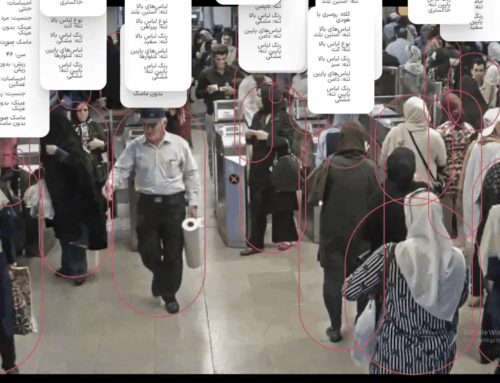
One such revelation came out a few weeks ago with the TSN-supported Eyes of Iran investigative project, which describes the Iranian regime’s widespread use of a Russian facial recognition software. Source code and leaked documents from Russian and Iranian companies helped our media partners uncover how Tehran acquired the software, and how the mass surveillance tool works to track —and ultimately silence — the population.
Bringing secret information to the surface in the public’s interest is scary. In authoritarian regimes, it becomes a life-or-death situation. One of the best-known cases goes back to the early 2010s, during the Syrian civil war, when a military official code-named Caesar smuggled out photographic evidence of widespread torture and execution by the Assad government. His act of courage led to the U.S. “Caesar Act” in 2019, which imposed sanctions on Syrian officials and others.
Caesar, who fled Syria to Jordan and flew to Qatar in 2013, revealed his identity as Farid Nada al-Madhan last year in an interview with Al Jazeera.
“From the first moment I thought about defecting from the military police, I was overwhelmed with fear and anxiety,” he said. “Either I had to support this murderous, criminal regime and become an accomplice to murder or defect, disavow its criminal acts and bear the consequences.”
This is the kind of dilemma many whistleblowers have faced when possessing damning information. It is particularly difficult for the military during wartime (even in non-authoritarian countries), when making an ethical decision can be labeled as treason. And yet, without people like Joe Darby, we might have never found out about the torture and humiliation of Iraqi prisoners by U.S. military personnel in the Abu Ghraib prison.
The fact secret information still manages to get out in tightly controlled environments is a testament to the moral compass of witnesses and to the doggedness of reporters. That’s the case of +972 publication, a nonprofit media run by Palestinian and Israeli journalists, which has reported on topics like the use of AI in Israeli strikes on Gaza and torture in Israeli prisons.
Yuval Abraham, an investigative journalist with the magazine, has said some of his sources are whistleblowers from the Israeli security forces, who feel they “have committed crimes, they have harmed Palestinian families, they have killed people and they wanted the Israelis to know about it.”
In particularly risky environments, technology can also be an ally. In 2021, a group calling itself Edalat-e Ali hacked the security cameras of Tehran’s Evin prison and leaked the footage to some independent outlets. The rare access gave a glimpse into the impunity of prison officials in Iran, revealing visual evidence of beatings, neglect and degrading treatment.
All these examples tell us one thing: There are ways to unearth and spread information that can raise public awareness of wrongdoing, even in the darkest places and circumstances. Throughout history, humans have spoken up, stood up against all odds and fought for justice. With the advance of surveillance tools and the fraying of democracy, whistleblowing is as vital as ever.